
Two Chiropractic Approaches With Different Uses
Spinal decompression and a traditional chiropractic adjustment are not interchangeable. Both may appear in one care plan, but they use different movements and may be selected for different findings. At Revive, an examination and review of relevant imaging guide the choice.
What Is Spinal Decompression at Revive?
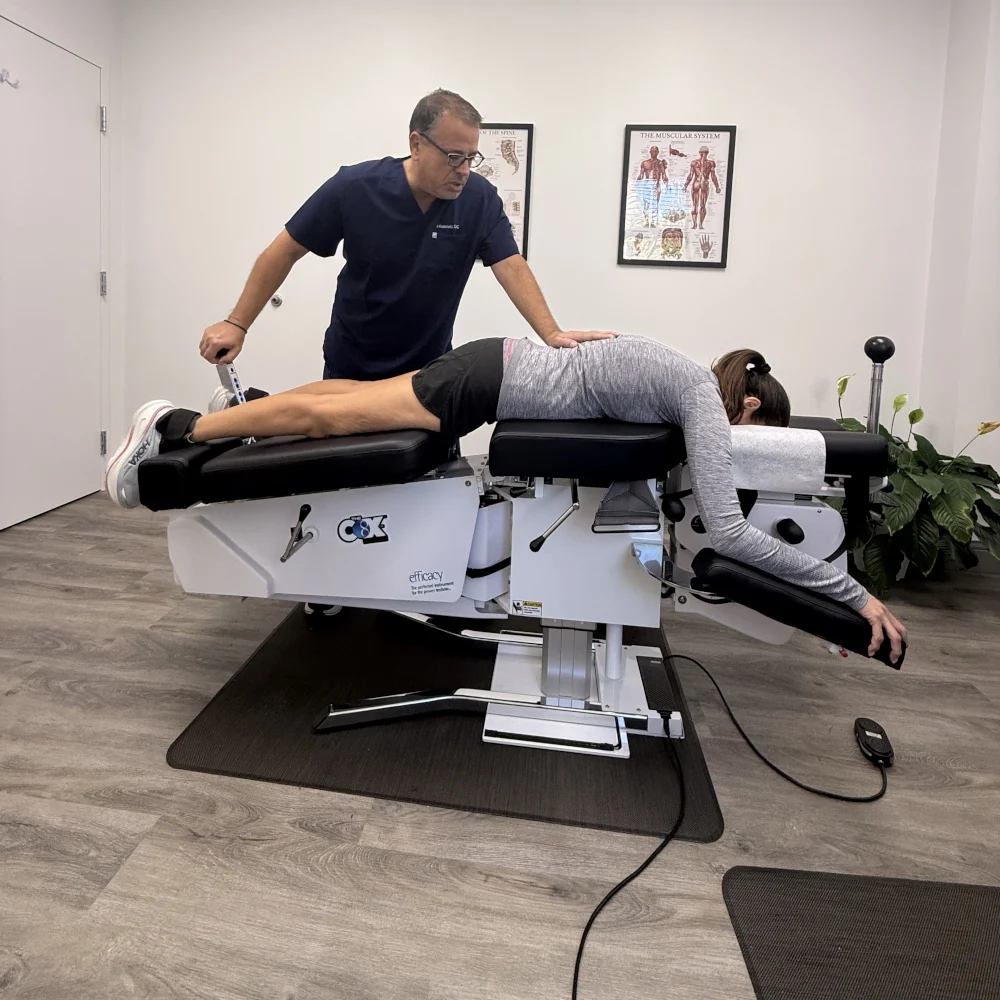
Revive uses a Cox 8 Flexion Distraction table. Dr. Kleinfeld applies controlled table movement and distraction to a selected cervical, mid-back, or lumbar area. At this practice, spinal decompression and Cox Flexion Distraction refer to the same core table-assisted approach. It may be considered for suitable disc, joint or nerve-related concerns, but it is not appropriate for everyone.
What Is a Diversified Chiropractic Adjustment?
Diversified Technique is a hands-on method that uses a specific, controlled thrust directed to a spinal or extremity joint. It is commonly associated with the familiar sound that can occur when gas is released from a joint, but the sound is not the purpose or proof of a successful treatment.
Key Differences
Cox Flexion Distraction uses repeated, controlled table motion and distraction; Diversified Technique uses a more direct manual adjustment. The table-assisted approach is often perceived as gentler and can be adapted for cervical, mid-back, or lumbar care. The better option depends on history, examination, imaging, comfort and clinical judgment – not on which technique is more popular.
When Might Each Be Considered?
Dr. Kleinfeld may consider decompression first when the findings suggest a disc-related or nerve-irritation pattern and you are a suitable candidate. A Diversified adjustment may be considered when a specific joint restriction or extremity concern is identified. These descriptions are general and do not predict what will be recommended to one patient.
Can They Be Used Together?
Yes. When both approaches are appropriate, decompression may be performed before a Diversified adjustment. Sequencing and frequency depend on the individual response. A plan may also include soft-tissue care, muscle stimulation, ultrasound or home exercises.
How Long Does Each Approach Take?
A typical spinal decompression session using the Cox 8 Flexion Distraction table runs approximately 20 minutes, (10 minutes on each area) with a course of care often reviewed at around two months before reassessment. A Diversified adjustment is usually a shorter, more direct visit. Either approach may be combined with soft-tissue care, ultrasound, muscle stimulation or home exercises as part of a broader plan, and the pace of care depends on how you respond.
What Does Each Treatment Feel Like?
During Cox Flexion Distraction/spinal decompression, you lie on the table while the chiropractor controls movement at a selected cervical or lumbar area. The motion is repeated and table-assisted rather than a rapid thrust. A Diversified adjustment is more direct and usually quicker; a joint may make a popping sound, although the sound is not the goal and does not show whether treatment was successful.
How Revive Determines the Appropriate Approach
What Determines the Plan?
The decision considers the health history, orthopedic and neurological tests, movement, symptom pattern, available X-rays or MRI reports and your response. Some findings may require another provider or additional testing instead of chiropractic treatment.
Why the Diagnosis Label Is Not Enough
Two people with the same MRI wording can have different symptoms, movement limitations and neurological findings. Likewise, back or neck pain can have more than one possible source. The technique should therefore be selected from the full clinical picture rather than from a phrase such as “disc bulge,” “arthritis” or “sciatica” alone.
Choosing the More Appropriate Starting Point
A table-assisted approach may be considered when controlled, repeated movement is preferable for the findings or comfort of you. A Diversified adjustment may be considered when a specific joint restriction is identified and a direct manual approach is suitable. Some people may receive both, while others may be advised to use one approach, a modified technique or a different form of care.
Examples of How the Decision May Differ
You with leg pain, neurological findings and a disc-related pattern may be evaluated differently from someone with local stiffness and no radiating symptoms. Another patient may have both joint-motion restrictions and a presentation for which table-assisted decompression is considered. These examples explain why the services can be used separately or together, but they do not prescribe a treatment without an examination.
Monitoring Your Progress
How Progress Is Reviewed
A useful care plan identifies what will be measured. This may include pain behavior, movement, tolerance for daily activities and relevant orthopedic or neurological findings. If you are not progressing as expected, the plan should be reconsidered. That may mean changing the technique, adjusting frequency, requesting additional information or referring you to another provider.
How the Response Is Monitored
The plan should identify what improvement would look like: less traveling pain, better movement, longer sitting or walking tolerance, improved sleep or a return to work and recreation. If symptoms worsen, neurological findings change or function does not improve as expected, the technique, frequency or overall diagnosis should be reconsidered.
What If the First Approach Does Not Help?
A lack of progress is information. Dr. Kleinfeld may modify the technique, add or remove supportive care, review the diagnosis, consider imaging or recommend medical referral. Continuing the same procedure indefinitely without agreed review points would not reflect an individualized plan.
Questions to Ask Before Treatment
Before beginning care, it may help to ask:
- What findings are guiding the recommendation?
- Why is this approach being considered for me?
- How will progress be measured?
- What should I report during or after care?
- When would the plan be changed or referral considered?
Frequently Asked Questions
Is one approach better than the other?
Neither approach is universally better. Cox Flexion Distraction/spinal decompression and Diversified adjustments use different movements and may suit different findings. The recommendation depends on the history, examination, available imaging, comfort and response rather than a preference for one technique in every case.
Does spinal decompression hurt?
The Cox table-assisted approach is designed to use controlled movement and is commonly described as gentle. Individual experiences vary, however, and people should immediately report increased pain, tingling, numbness or another unfamiliar symptom so the technique can be modified or stopped.
Is a Diversified adjustment safe for everyone?
No chiropractic technique is automatically appropriate for everyone. Diversified Technique can be adapted, but the chiropractor must consider health history, examination findings, imaging and relevant risks. A different approach, further testing or referral may be recommended instead.
How do I know which one I need?
You do not need to choose a technique before the appointment. Dr. Kleinfeld reviews your symptoms, movement, orthopedic and neurological findings and any available imaging, then explains why a particular approach – or no chiropractic treatment – is being recommended.
Can I request a specific technique?
Yes. You are encouraged to discuss comfort, previous experiences and preferences. That conversation can influence how care is delivered, but the final recommendation must still be appropriate for the findings and may involve a modified technique or a different form of care.
Will insurance cover either treatment?
Revive does not bill insurance and operates on a self-pay basis. Cash, Zelle and credit cards are accepted, and financing is available. Ask the office about current fees and package details before beginning care.
Schedule an Evaluation
Call 561-919-2262 to arrange a chiropractic evaluation at Revive’s Jupiter office.